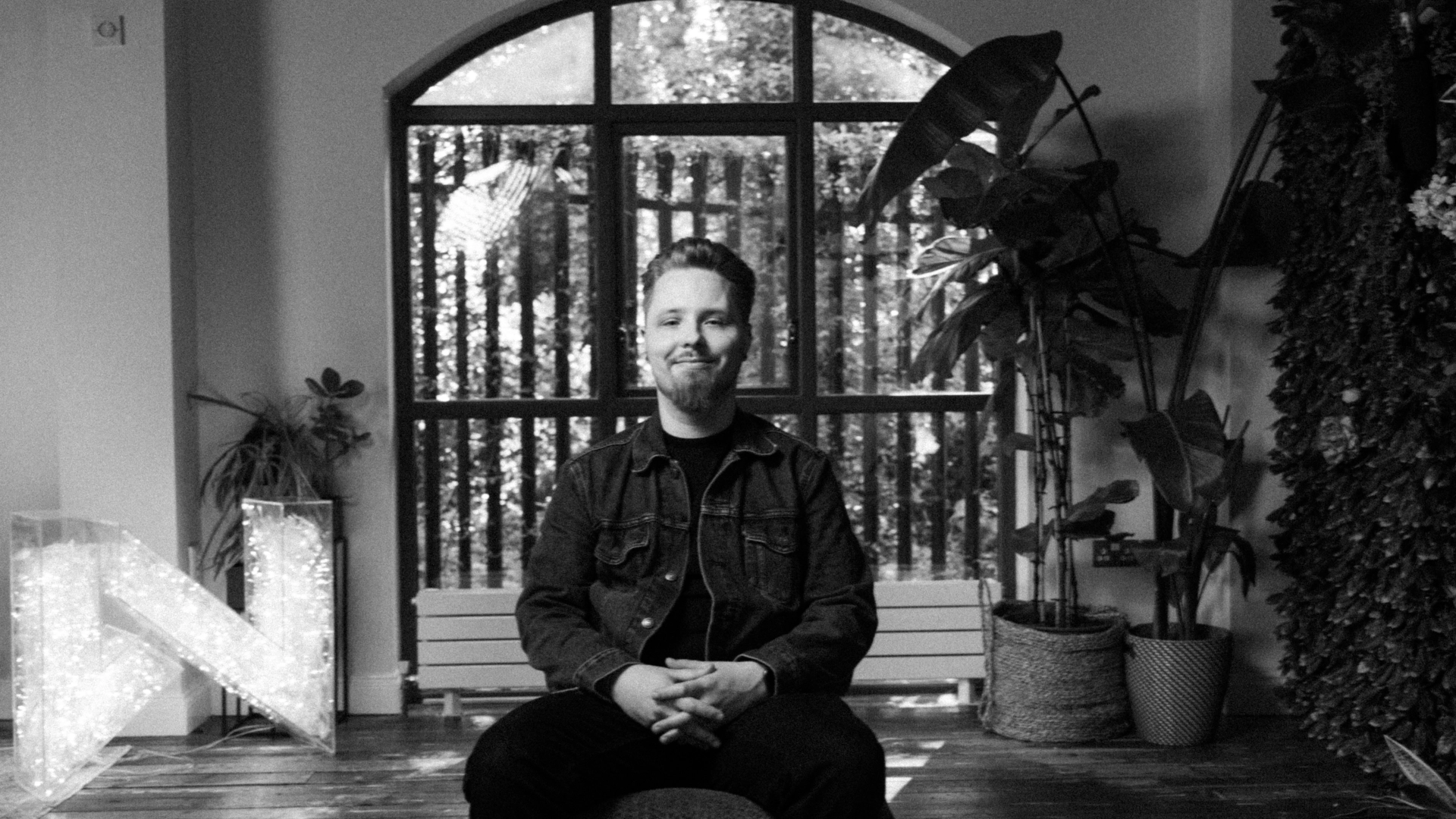
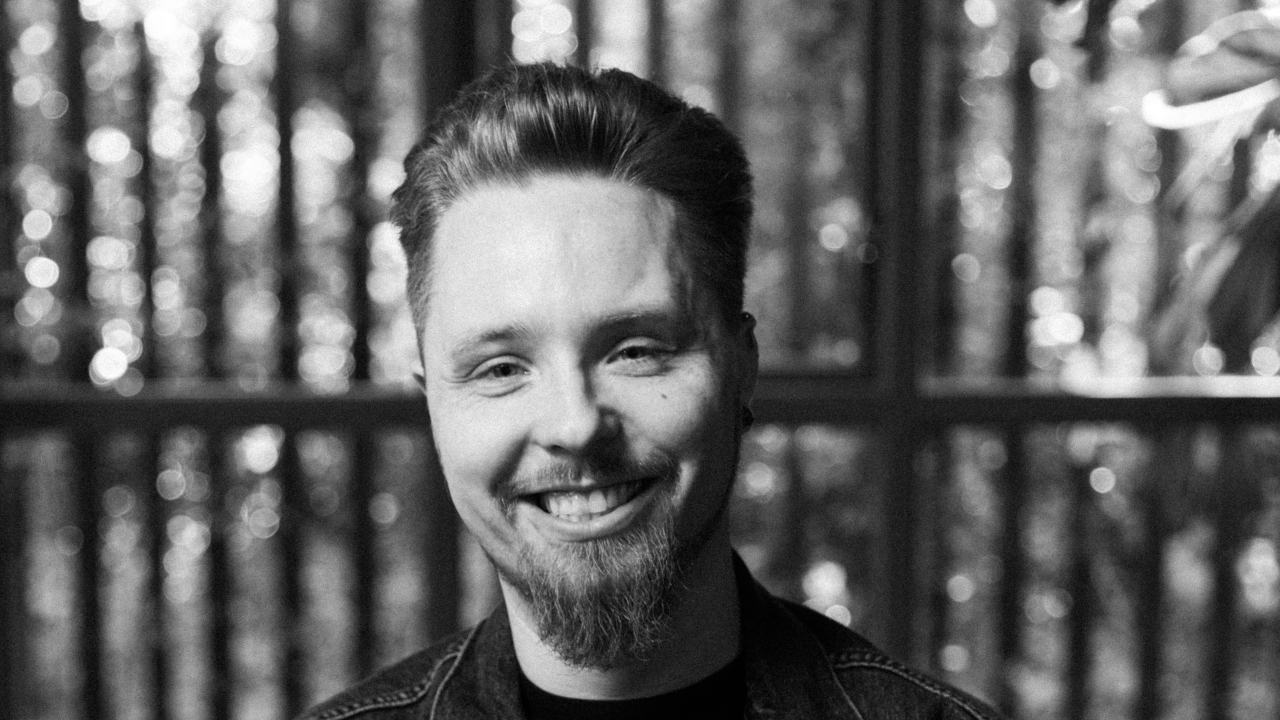
You began your career in graphic design - what sparked the shift into animation and motion graphics?
"My journey into graphic design and animation began during my foundation year at NWRC in Derry, where I explored a range of creative mediums and quickly gravitated toward digital art. I started experimenting with logo design in Illustrator and animation in Flash before studying Design and Communication at Magee, where my passion for graphic design eventually evolved into 3D animation.
After graduating in 2013, I began working as a 3D animator while teaching myself After Effects through online tutorials from creators like Video Copilot and School of Motion. I originally joined Whitenoise as a Graphic Designer, but after just two days I was invited to meet with the two animators because they could see my skills and understood the value I could add to that team - I’ve never looked back since."
How would you describe your creative style today, and how has it evolved over time?
"I would describe my creative style as broad and versatile, as I’ve always considered myself more of a generalist than someone tied to one specific look. Rather than consciously developing a signature style, my work has naturally evolved over time.
I’m particularly drawn to animation work with texture and depth, which likely comes from my early experiences with painting and ceramics. In my own craft I particularly enjoy creating visuals that feel tactile and have a strong sense of character. While many projects are shaped by client brand guidelines or established styles, there are occasions where we get the freedom to create something completely unique and that's where my skills shine.
Over the last few years I’ve gained much more confidence in defining ana appropriate visual style for a project and justifying my creative decisions. I think that confidence comes from experience, collaboration, and continued dedication to the craft."
What’s your process for turning highly technical or abstract ideas into something engaging and easy to understand?
"It’s fascinating when we get projects based on very complex products or services. I hadn’t really given much thought to quantum computing before and wouldn’t have been able to explain how it works, so when the project came in it was vital to try to understand everything we could about quantum computing, and decipher how technical V how accessible the script and visuals needed to be.
Starting with a basic understanding of the subject matter helps when researching how similar businesses operate within the market. While exploring quantum computing, for example, I discovered that many systems are extremely large and require significant cooling and power. Our client’s technology stood out because they had successfully scaled the system to fit within a standard server rack in a data centre.
That immediately gave us a strong and unique selling point, and our challenge was to communicate that innovation clearly through a creative and engaging animation.
Ultimately, it's all about creating a visual language that can help anyone to understand the subject matter. This is crucial in todays world as with social media accelerating how we consume everyday content, the viewer needs to understand what they are watching. As a creative it’s very important to be flexible in terms of the work you create, and it’s important to meet the needs of a clients brief. In the initial phase simply getting to know the client and their industry is crucial. If we don't ensure the clients message is communicated clearly, otherwise the audience will not understand the message. I think this sort of skill is developed through consistently creating and iterating, as that's how you learn how a client engages with their audience and gains traction online."
What does “art” mean to you in the context of animation?
"I think the arts is such a wide spectrum of creativity it can be hard to define what fits. In my opinion there is an art to creating graphic design and an art to creating movement with animation - the same way a photographer creatively frames a shot.
It can seem very difficult at times to consider work you create as art if it is produced under a set of strict brand guidelines, but I think the challenge is to use your eye to influence the brands in your own unique way. Ultimately what we as an individual define as art can be different to someone else’s opinion and that doesn’t make it any less meaningful
I personally believe in our industry the art of creative problem solving definitely falls under the arts umbrella, it can seem very difficult at times to consider work you create with a set of strict brand guidelines, but I think the challenge is to use your eye to influence the brands in your own unique way."
What are your thoughts on the future & AI
"For the past year, AI has been at the forefront of the creative industry and on the minds of many creatives. With rapid changes happening alongside companies reducing marketing budgets, concerns about the future are understandable. At times, I’ve wondered whether it would make sense to retrain in something more future-proof, but after spending 15 years developing my animation skills, it’s hard to imagine stepping away from a career I genuinely enjoy. Recently, though, I’ve noticed the conversation around AI beginning to shift. Many well-known studios are now proudly highlighting that their work is human-made, and some animated films have even included statements in their credits confirming that generative AI was not used. To me, this feels similar to past trends like virtual reality and the metaverse, technologies that created huge excitement but never fully replaced real human experiences.
I believe AI will become a valuable tool for speeding up repetitive or technical tasks, but when it comes to creativity and storytelling, people will always value the human touch. Art is ultimately about emotion, personality, and connection, and those are things technology alone cannot replicate."
Finally, is there a particular project from recent years that stands out as especially meaningful or memorable?
A particular project that I enjoyed working on most was a series of eductaional animations for NICIE (NI Council for Integrated Education) for their Bias-busting series. Initially this project was primarily a graphic design scope and after seeing the illustration style developed for character -led narrative in the books we were tasked with creating two separate animations, one for parents and one for teachers.
The animation series used hand illustrated visuals to communicate:
We were very fortunate to also win an IDI Award for the series, adding to the enjoyment and giving us a moment to toast the hard work put in by our team.